St. Louis is a freight town with a serious agricultural technology sector attached. Both run on scheduling and data problems that spreadsheets stopped handling a long time ago.
Companies moving freight by more than one mode have a data problem most software assumes away. Barge, rail and truck do not report the same way, and reconciling them by hand is a job.
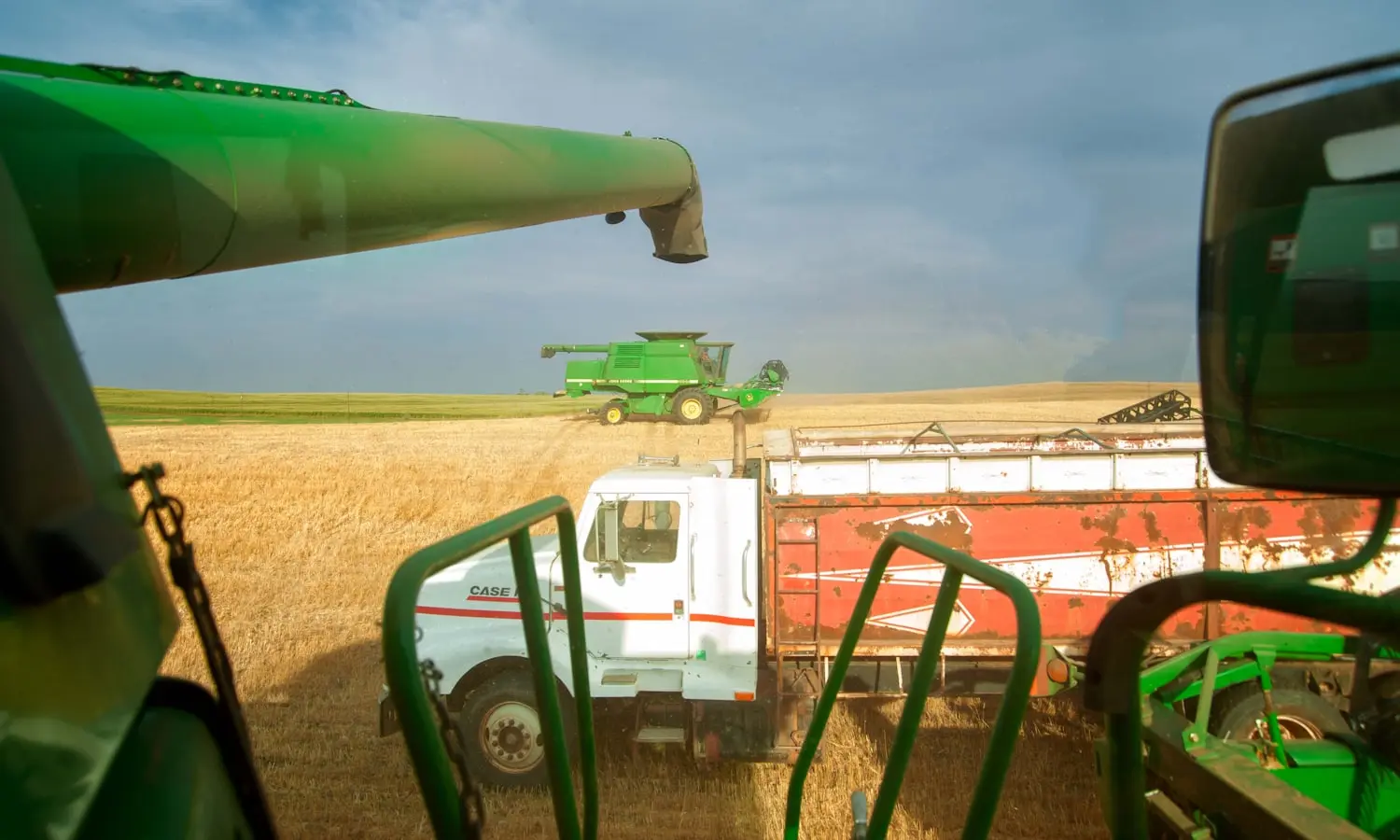
Agricultural cycles mean the same company has three very different operating months and nine quiet ones. Systems designed for a steady state fail exactly when volume peaks.
Information captured in a field, a yard or a terminal, often without reliable connectivity, that has to arrive intact and on time.
A shipper moves product by barge, rail and truck depending on season and price. Each mode reports differently, on different schedules, in different formats. Somebody merges them into a workbook every Monday to answer where things are and what it cost. By Wednesday the workbook is stale. The project is not a new TMS: it is a reconciliation layer that pulls from the three sources on a schedule and produces one current view, with the exceptions flagged instead of hidden in a column nobody scrolls to.
The metro sits at a genuine logistics crossroads, with barge, rail and interstate all converging, and has built a notable agricultural science cluster alongside financial services and healthcare.
Strong regional agencies exist, mostly focused on brand and marketing. The operational software side is thinner, which is where an outside team competes well.
Activity spreads across the river: the Illinois side carries a lot of the warehousing and rail interchange, the western suburbs around Chesterfield hold agricultural science and corporate, and the older industrial base sits close to the river on both banks.
Also worth a look: what we do by industry, which goes deeper than this page on the specifics of each sector.
It changes the timeline more than the build. Anything structural goes live well before your season, tested against the volume you actually see at peak rather than at an average month. And the freeze window during peak gets agreed in writing at the start, because that is not the time to discover something breaks under load.
Yes, that is how every engagement runs. We are in Costa Rica, on Central time, so the overlap covers your whole workday. Compared to a team ten time zones away, that difference shows up in how fast decisions get made rather than in a status report.
With a call about where the work is leaking, not about technology. If what you need is a setting in a tool you already pay for, we say so. If it is a build, you get a proposal with defined deliverables and a fixed price for the work.
Tell us where the work is leaking. If the fix is something you can do without hiring anyone, we'll say that on the call.
Tell us what you need and we'll get back to you. No commitment, no sales pitch.
We use cookies to measure how the site gets used and for ads. Accept them or turn them down.
 Salomon Web Services