The Inland Empire holds a remarkable concentration of distribution and warehousing serving Southern California and beyond. Enormous physical throughput, often on software that has not kept pace.
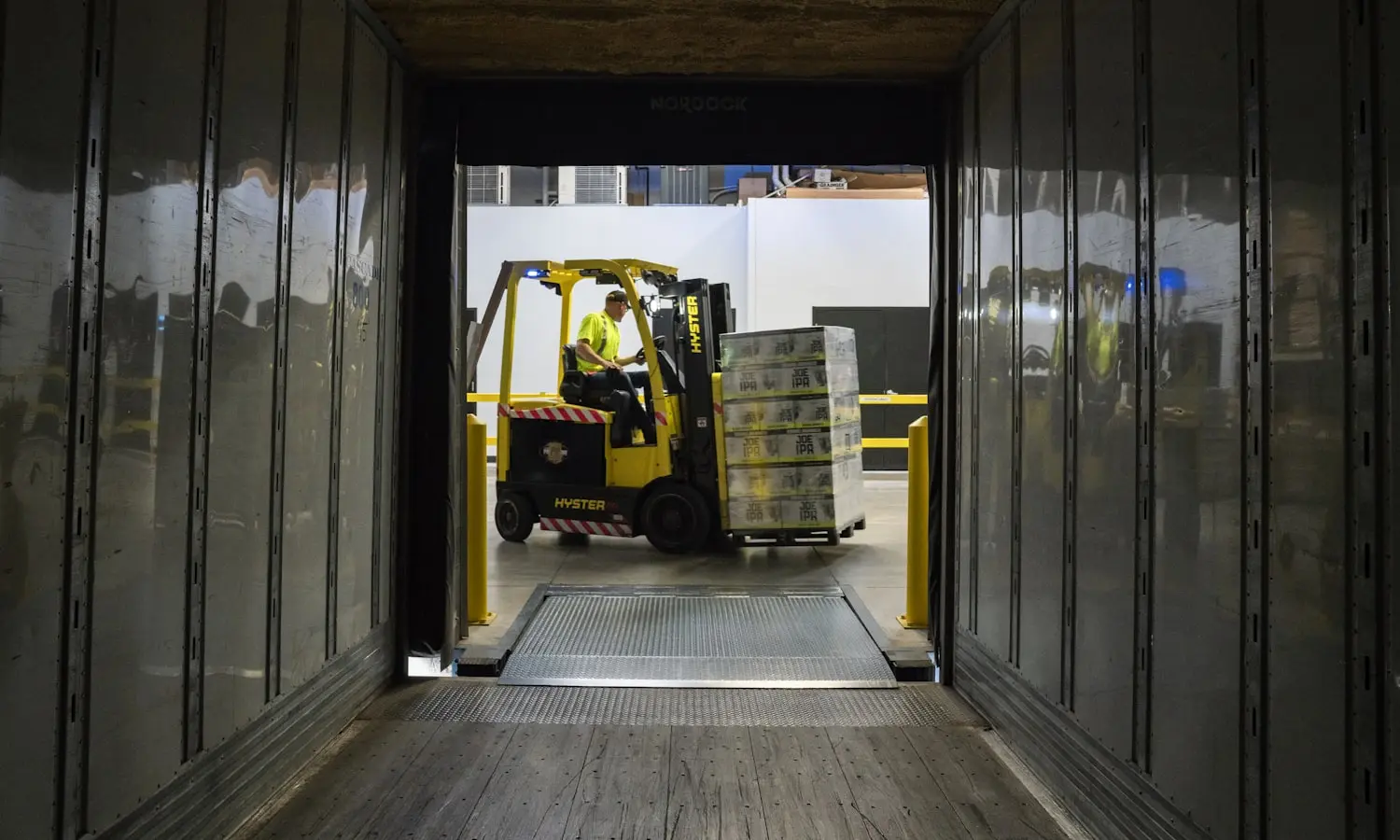
An operator staffs the floor based on what last week looked like, because that is the only number available before the shift starts. Inbound volume varies enough that some days are overstaffed and some are underwater, and both cost money in different ways. Connecting inbound appointment data to a labor plan turns that into a forecast instead of a guess. It is a small project against a cost that recurs every single shift.
A warehouse or distribution operator of fifty to five hundred people, moving serious volume on tooling that has not kept pace. They usually know exactly which part of the operation is blind, and they have been quoted an enterprise system that costs more than the problem.
Many operators here run either an oversized enterprise platform or a set of spreadsheets. The middle ground is where most of them actually live.
Knowing what came in, what went out and what is sitting, in something close to real time, without someone walking the floor to check.
Staffing a warehouse against actual inbound volume rather than against last week is a data problem with a direct cost attached.
The warehousing concentrates along the interstate corridors through Ontario, Fontana and Moreno Valley, which is where the volume actually is. Riverside proper is more professional services and healthcare than distribution.
One of the largest logistics and warehousing concentrations in the country, driven by proximity to the ports and to the Southern California consumer market, with manufacturing and healthcare alongside.
Logistics technology is well represented at enterprise scale. Mid-size operators are underserved, which is where the opportunity sits.
Also worth a look: what we do by industry, which goes deeper than this page on the specifics of each sector.
That gap is common here and it is a legitimate place to build. Ripping out the WMS is rarely the answer. What usually works is building the operational layer it never covered: your receiving flow, your cross-dock logic, your labor planning. Smaller project, faster payback, and the system of record you already trust stays where it is.
Yes, that is how every engagement runs. We are in Costa Rica, on Central time, so the overlap covers your whole workday. Compared to a team ten time zones away, that difference shows up in how fast decisions get made rather than in a status report.
With a call about where the work is leaking, not about technology. If what you need is a setting in a tool you already pay for, we say so. If it is a build, you get a proposal with defined deliverables and a fixed price for the work.
Tell us where the work is leaking. If the fix is something you can do without hiring anyone, we'll say that on the call.
Tell us what you need and we'll get back to you. No commitment, no sales pitch.
We use cookies to measure how the site gets used and for ads. Accept them or turn them down.
 Salomon Web Services