No fluff, just actionable insights on AI, automation, software and digital marketing for US companies.

Why dealer websites fall out of sync with the DMS, how to check yours in five minutes, and what actually fixes it. Written for independent lots running Frazer or DealerCenter.
Read article →
Firms want to move up the value chain into advisory work. The obstacle is usually not sales skill, it is that nothing in the practice surfaces what a client needs.
Read article →
Getting documents from new clients is the slowest part of most accounting engagements, and firms treat it as a client problem rather than a process problem.
Read article →
Accounting firms run their own operations on tools built for their clients' books. The point where that breaks is predictable, and most firms pass it without noticing.
Read article →
Accounting is a referral business, and the website's job is not to generate leads. It is to survive the check that happens after the referral.
Read article →
The busy season crunch is mostly made of work that does not require an accountant. Separating those two things is where the capacity is.
Read article →
Electronic health records manage care. They do not manage relationships, which is why practices lose patients they never knew were leaving.
Read article →
Practices send reminders and still lose slots. The interventions that move the number are narrower and less obvious than sending more messages.
Read article →
Post-visit follow-up, pending results and unscheduled recalls all run on staff memory in most practices. What happens when the person who remembers is out.
Read article →
Practices spend on marketing without knowing which sources produce patients who stay. The tracking that answers it is simpler than the reporting most practices attempt.
Read article →
Most insurance agency websites are brochures with a phone number. What the ones that produce business do differently, and why the carrier-provided template is not enough.
Read article → Applied Epic, AMS360 and carrier portals are built to service policies, not to grow an agency. Where the gap shows up and what independent agencies do about it.
Read article →
An agency's book is its value. Most agencies have that book spread across a carrier system, a vendor platform and several spreadsheets, and have never asked what happens if access ends.
Read article → Carrier statements arrive in different formats on different schedules, and someone reconciles them by hand. What that costs, and what a system that does it properly looks like.
Read article →
Speed of first response predicts who wins an insurance lead more reliably than price does. What the delay actually costs and how agencies close the gap without hiring.
Read article →
Most agencies track quotes issued and policies bound. The gap between those two numbers is where the money goes, and almost nobody measures what happens inside it.
Read article → Why renewals get away from independent agencies, and how automated outreach with a real conversation behind it changes retention numbers.
Read article →
Most legal inquiries arrive outside business hours, and callers who reach voicemail call the next firm. What can be automated in legal intake, and what cannot.
Read article → Practice management platforms are built around a generalized matter lifecycle. Firms with a specific practice keep hitting the same wall, and the workarounds have a cost.
Read article →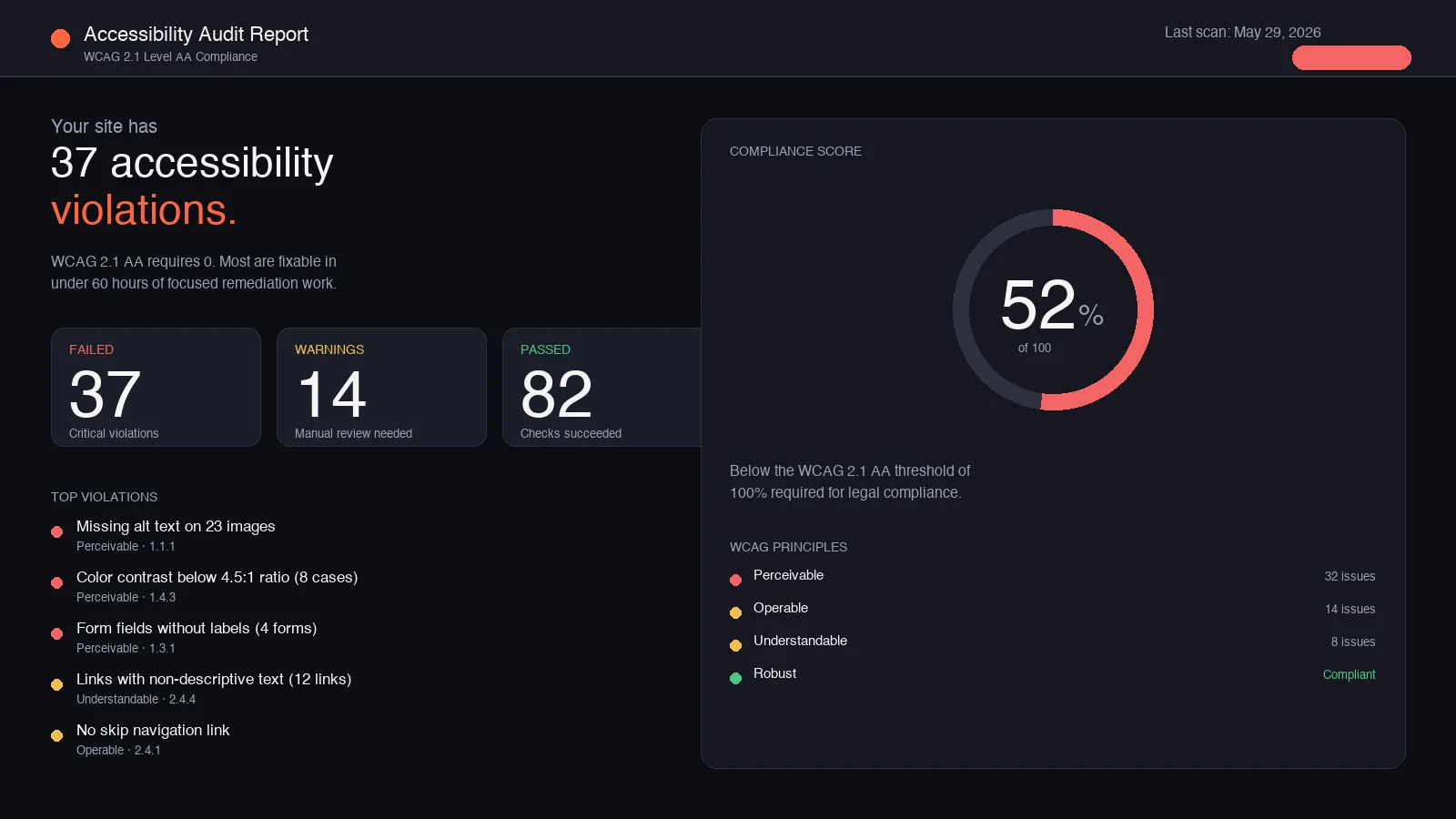
Firms hand client information to vendors as a matter of routine. The ethical obligations do not transfer with it, and most firms have never examined what they agreed to.
Read article →
Firms know referrals drive their business and cannot say which referrals, from whom, worth how much. That gap shapes where marketing money goes.
Read article → Transportation management systems are built for a generalized operation. Small carriers and brokers with a specific niche keep paying for modules they cannot use.
Read article →
Status calls consume dispatch capacity all day and produce nothing. The information customers want usually already exists somewhere they cannot see.
Read article →
Carriers respond to turnover with pay increases and keep losing drivers. Much of what drives the decision is operational and visible in data nobody is watching.
Read article → Revenue per mile is easy to see and misleading on its own. The costs that determine whether a lane works are spread across systems that do not talk to each other.
Read article → Why one combined Practice Areas page costs law firms rankings, what a real practice area page needs to include, and how to build them without triggering thin content problems.
Read article →
Search terms about specific neighborhoods are the one place agent websites can beat the portals, and most agents fill those pages with data the portal already shows better.
Read article →
Portal leads go to whoever answers first, and most teams answer in hours. What closing that gap looks like when nobody is available to sit on the phone all day.
Read article →
Portals own the search traffic and that is not changing. What agents can own instead, and why the client relationship data is the part worth controlling.
Read article →
Repeat and referral business is the cheapest revenue in real estate and the most neglected. What it takes to actually work a past client list.
Read article →
Deals fall apart in the gap between accepted offer and closing. Most teams manage that window with a checklist and someone's memory.
Read article → Most US businesses have a Google Business Profile but configure only a third of the settings that matter. The 12 that actually move local search rankings in 2026 are not the obvious ones.
Read article →
Most clinic websites in the US violate HIPAA without their owners realizing it. The contact form alone is enough to trigger six-figure fines. Here is what compliance actually requires in 2026, in plain language.
Read article →
Most US businesses should buy an off-the-shelf CRM. But a specific minority loses money every month forcing their business into a tool that doesn't fit. Here is the honest framework for when a custom CRM beats HubSpot or Salesforce.
Read article → Most US small businesses pick Google Ads or Meta Ads based on what they're already familiar with, then wonder why the money isn't working. The right channel depends on how your customers actually buy. Here is the honest breakdown for 2026.
Read article → The SEO industry has trained clients to expect a 12-month wait before seeing results. The actual timeline is closer to 3-6 months for most US businesses if the work is done right. Here is what gets lost in the standard agency timeline.
Read article → 65% of US patients abandon a clinic that requires a phone call to book an appointment. The clinics getting this right are not using the obvious booking platforms. Here is what works in 2026.
Read article → Local SEO has changed more in the last two years than in the previous five. The tactics that worked in 2023 are now noise. The 7 that matter in 2026 are the ones most small business owners are not doing.
Read article → Most US small businesses either avoid marketing automation entirely or set up sequences that make customers feel like spreadsheet rows. The line between automation that builds relationships and automation that burns them is specific. Here it is.
Read article →
Most US businesses either automate nothing in their sales pipeline or automate the wrong things and kill their close rate. Here is the practical guide to what actually should be automated and what destroys deals when you automate it.
Read article →
The US Hispanic population is 65 million strong and uses healthcare differently than the English-only majority. Most clinic websites quietly exclude them. Here is what bilingual healthcare done right actually looks like.
Read article → A CRM is only as good as what it connects to. Most US businesses either integrate nothing and re-type data all day, or integrate everything and create a fragile mess. Here are the integrations worth setting up and the ones that aren't.
Read article → Most US small businesses have email in one place, customer data in another, and no connection between them. The result is generic blasts and lost context. Here is the practical email + CRM stack that turns your list into actual revenue.
Read article → Most US businesses hit by a Google algorithm update get the same generic advice: write better content and wait. The actual recovery playbook is more specific and most agencies won't share it because it doesn't fit a monthly retainer.
Read article → The US Hispanic market represents over 63 million people and $2.8 trillion in buying power. Most US business websites are completely invisible to Spanish-language searches even when their customers speak Spanish. The bilingual SEO playbook to fix this is straightforward but rarely executed correctly.
Read article →
US clinics are losing patients to long hold times, busy signals, and after-hours voicemail that nobody returns. AI receptionists now handle phone, SMS, and web chat at human-level quality. Here is what they actually do and what they cost.
Read article → The internet is flooding with AI-generated content that ranks for nothing and converts no one. For US small businesses, this is actually an opportunity. Here is how to do content marketing that stands out precisely because most of it now doesn't.
Read article → Most US small businesses spend on marketing without knowing which channels bring customers. They keep funding what feels busy and cut what actually works. Here is practical attribution tracking that doesn't require an analytics degree.
Read article →
Most restaurants treat their Google Business Profile as a glorified business card. The 7 settings that separate the busy restaurants from the empty ones are not the obvious ones. Here is what actually works.
Read article →
Most US restaurant websites are digital menus. That decision costs the average operator $40,000 to $80,000 per year in delivery commissions. Here is what changes when your site actually takes orders.
Read article →
Telemedicine is no longer a pandemic novelty. It is now baseline expectation for many patient interactions. Clinic websites built before 2024 are missing 4 specific features that determine whether patients trust them. Here is the post-2025 standard.
Read article → ADA accessibility lawsuits against US small business websites have grown 320% since 2018. Most owners don't realize their site is non-compliant until they receive the demand letter. Here is what compliance actually requires and how to fix it in 90 days.
Read article →
Analysis of ABA Model Rules and state Bar rules applied to Google reviews for US law firms. What you can ask, what you cannot, and how to build a real review strategy.
Read article → Restaurants drown in phone orders, text messages, and DMs during peak hours. AI agents handle this load 24/7, route orders to the kitchen automatically, and let your staff focus on the room. Here is how it actually works in 2026.
Read article → The choice of website platform shapes the next 5-10 years of your digital operation. Most US small businesses pick the wrong one for the wrong reasons. Here is the honest comparison nobody wants to give you because each platform has a built-in lobby.
Read article →
Analysis of attention span when a prospective client lands on a law firm website and what they need to see in seconds to not bounce back to Google search results.
Read article →
When a US customer searches 'restaurants near me', they pick a place in about five seconds. The four factors they unconsciously use to decide are not the ones most owners think. Here is what actually drives the click.
Read article →
Most US small business websites load in 4-7 seconds on mobile. Every additional second past 3 costs you 32% of your visitors. The fix is technical but bounded. Here is what actually moves the needle on site speed in 2026.
Read article →
Analysis of ABA Model Rules of Professional Conduct (Rule 7 series) and state Bar advertising rules applied to law firm websites. What is allowed, what is prohibited, and the gray zones.
Read article →
OpenTable, Resy, Tock, Yelp Reservations, or a custom-built system? The decision affects margin, customer data, and brand control. Here is a real comparison without the platform marketing.
Read article → Most US small business owners don't know whether their site needs a redesign or a full rebuild. The decision framework is actually simple once you separate the structural problems from the cosmetic ones. Here's how to know.
Read article →
Checklist of the sections every US law firm website needs to generate consultations, build trust, and rank in Google. With concrete criteria for each.
Read article → Most US small business websites underperform for the same seven reasons. Once you know the patterns, you can spot which ones are killing your conversion rate in under 10 minutes. Here are the seven.
Read article → The default advice in 2026 is 'just buy SaaS'. For most cases it's right. For some, it's how US companies spend millions on tools that never fit their business. Here is the framework that separates the two.
Read article →
Real data on how Google visibility changes consultation volume for US law firms. Sources: Backlinko CTR studies, Clio Legal Trends Report, and direct market observation.
Read article → Most SaaS MVPs take 8-14 months to ship because teams confuse 'minimum viable' with 'minimum acceptable'. Real 90-day MVPs are possible and produce better products than slower ones. Here is the operating model that makes it work.
Read article → The tech stack you choose in 2026 will shape your engineering velocity, hiring pool, and product capabilities for the next 5+ years. Most teams make these decisions based on developer preferences instead of business reality. Here is how to make them well.
Read article → Most US companies considering nearshore development hear pitches about cost savings and time zone alignment. The actual operating model is more nuanced. Here is how nearshore development works in 2026, what makes it succeed, and what makes it fail.
Read article → Most US mid-size companies run on legacy systems that nobody wants to touch and that don't talk to anything new. The integration work is harder than vendors admit but more bounded than companies fear. Here is the playbook that actually ships.
Read article →
Most business owners focus on what automation costs. Few calculate what NOT automating costs: staff hours, lost leads, slower growth, and competitive disadvantage.
Read article →
Common website problems that drive away potential customers (slow load times, unclear messaging, bad mobile experience, and more) with actionable fixes for each.
Read article →
An honest comparison of Shopify and custom-built websites for US businesses in 2026: when to use each, real costs, and the trade-offs that matter.
Read article → What does working with a nearshore software development team actually look like? A realistic picture of tools, communication cadence, and workflow for US clients.
Read article → A practical guide for US business owners hiring a software development agency in 2026: what questions to ask, red flags to avoid, and how to evaluate proposals.
Read article →
A clear breakdown of nearshore, offshore, and US-based software development: real cost differences, communication trade-offs, and when each model makes sense.
Read article → A practical guide to building a software MVP in 2026: what to include, what to cut, how much it should cost, and how to validate before you build.
Read article → A practical comparison of the three leading workflow automation tools in 2026 (Make, Zapier, and n8n) based on pricing, complexity, and real use cases.
Read article → A step-by-step CRM setup checklist for small businesses: pipeline stages, custom fields, automation rules, and integrations that actually matter.
Read article → An honest comparison of HubSpot and Pipedrive for small and mid-size businesses in 2026: pricing, features, and which one to choose based on your actual situation.
Read article →
Before requesting quotes, understand what factors determine the cost of an AI agent: workflow complexity, integrations, deployment channels, and operational costs.
Read article →
Not every business needs AI automation today. Here are five clear signals that you're at the point where automation will deliver real, measurable ROI.
Read article → Stop wasting your best reps on tire-kickers. AI lead qualification automatically scores, enriches, and routes leads so your team only talks to buyers.
Read article →
How AI voice agents handle calls and texts after business hours, capturing leads, booking appointments, and responding instantly while your team sleeps.
Read article → A plain-English explanation of AI agents for small business owners: what they do, how they work, and which problems they actually solve.
Read article →Try another word, or browse all topics.
Tell us what you need and we'll get back to you. No commitment, no sales pitch.
We use cookies to measure how the site gets used and for ads. Accept them or turn them down.
 Salomon Web Services