 Salomon Web Services
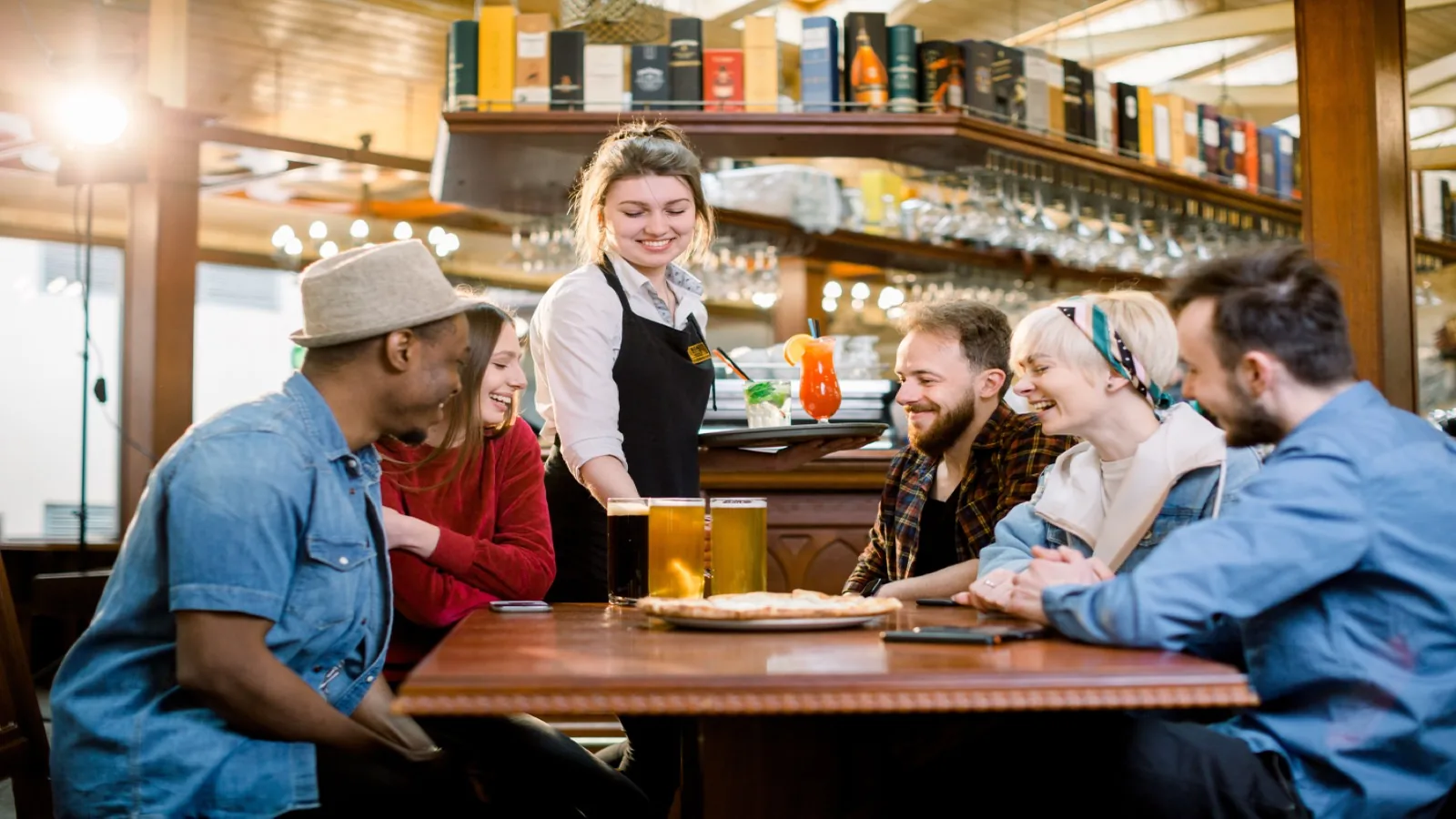
Restaurants have been complaining about the same problem for fifty years. Too many channels, too much demand at peak, not enough people. The complication today is that the channels have multiplied. You used to have walk-ins, phone, and reservations. Now you have walk-ins, phone, reservations, DoorDash, UberEats, Grubhub, ChowNow, your own website, your Instagram DMs, your WhatsApp Business, and whatever app the latest delivery partner pushed.
The traditional response to this was to hire more people. The 2026 response is different. AI agents now handle conversation, ordering, scheduling, and triage at the same quality level as a trained host, for a fraction of the cost, twenty-four hours a day. The technology has crossed the line from “interesting” to “operational” in the last eighteen months, and the restaurants that adopt early are building real cost advantages over those that wait.
What an AI agent actually does in a restaurant context
The word “AI agent” gets used loosely. In this context, it means a system that:
- Receives messages through one or more channels (WhatsApp, SMS, web chat, Facebook Messenger, Instagram DM)
- Understands what the customer wants in natural language
- Answers questions about menu, hours, allergens, reservations, parking
- Takes orders, calculates totals, processes payment if needed
- Routes the result to your kitchen, POS, or staff member, in real time
- Handles edge cases by escalating to a human when it needs to
What it is not: a chatbot with twenty preset buttons. A 2026 AI agent for restaurants holds full conversations, remembers context, handles modifications, and produces an actual outcome (an order, a reservation, an answer) without sending the customer to a phone call.
The four problems they solve, in order of impact
Phone calls during dinner rush
For a typical neighborhood restaurant in the US, the phone rings 20 to 40 times during the Friday and Saturday dinner rush. Each call takes one to three minutes of host time. That is roughly a full hour of staff attention that should be on the floor, on the phone instead.
An AI agent handles 70 to 90 percent of those calls without human involvement. The other 10 to 30 percent are real situations that need a person (a party of 12, a complicated allergy, a complaint), and those get routed to the manager immediately. The phone stops ringing. The host runs the door. The pace is calmer. The team can actually focus.
WhatsApp and SMS orders from regulars
A lot of restaurants in the US, especially those serving Latino or immigrant communities, take a significant percentage of orders via WhatsApp or SMS. The owner or the manager handles them on their personal phone, which means orders get missed, mixed up, or forgotten when that person is busy with something else.
An AI agent owns the WhatsApp Business or SMS line. Every incoming message gets an immediate, friendly response. The order is parsed, confirmed back to the customer, sent to the kitchen, and timed correctly. The owner no longer has to be on their phone during service. Order capture rate goes up. Errors go down.
After-hours bookings and questions
About 40 percent of restaurant reservation requests happen outside business hours. People plan dinner the night before, plan a Saturday brunch on Wednesday, look up your menu on Sunday afternoon. If you do not answer those messages until Monday morning, a chunk of them book somewhere else.
An AI agent runs 24/7. The Sunday afternoon question about whether you have a private room available gets answered immediately. The Tuesday night reservation request for Friday gets confirmed before the customer even closes the app. You stop losing future bookings to availability response time.
Multilingual customers, automatically
If your restaurant serves a bilingual neighborhood (most US restaurants in major cities do), you probably have customers who message in Spanish, Mandarin, Portuguese, or another language. Most owners and managers cannot reply natively in all of them.
A 2026 AI agent reads and responds in the language of the customer, automatically. A Spanish-speaking grandmother who messages your WhatsApp gets a response in Spanish. An English-speaking tourist gets a response in English. There is no setting to flip and no extra cost. This single capability often produces immediate increases in WhatsApp orders from communities that were under-served by the previous flow.
What an AI agent for a restaurant costs in 2026
This is where most owners stop reading because they assume it is enterprise pricing. It is not anymore.
Modern AI agent infrastructure for a single-location restaurant typically costs $200 to $600 per month, all-in. That includes the AI model API calls (usually OpenAI, Anthropic, or open-source equivalents), the messaging platform integrations (WhatsApp Business API, Twilio for SMS), the hosting, and the basic POS or printer integration.
Setup and customization is a one-time cost, usually $2,000 to $8,000 depending on complexity. A restaurant with a simple menu and minimal integrations is on the lower end. A multi-location restaurant with complex modifiers, multi-language support, and custom POS integration is on the higher end.
To put that in context: a single part-time host costs $2,500 to $4,000 per month in payroll plus benefits. An AI agent that does 60 to 80 percent of what that host does on the phone and messaging side costs a quarter of that, runs 24/7, never calls in sick, and gets better every quarter as the underlying models improve.
The objections worth taking seriously
“My customers want to talk to a real person.”
Some do. Most do not, especially under 40. The data on consumer preference for self-service in restaurants has shifted dramatically post-2020. The customers who specifically prefer to talk to a human still can. The AI agent recognizes “let me talk to someone” and routes the conversation. The customers who just want to place an order and get on with their evening prefer to not wait on hold.
“It will get orders wrong.”
A modern AI agent that has been configured correctly for your menu makes fewer order errors than a tired host on a Saturday night. That is measurable in side-by-side trials. The agent does not mishear “extra cheese” as “no cheese”, does not forget to add the side, does not lose track of which order goes where. The error rate is consistently lower than human order capture under load.
“I do not have time to set this up.”
Setup takes one to two weeks with a qualified team. After that, the daily time commitment is essentially zero. You glance at the conversation log once a week. The agent does the work.
The 90-day rollout that actually works
The mistake most restaurants make is trying to deploy everything at once. The sequence that works:
Weeks 1-2: WhatsApp Business only. Connect the agent to WhatsApp Business. Let it handle FAQs, hours, and reservation requests. Keep orders manual until you are confident the agent handles conversation correctly.
Weeks 3-4: Add SMS. Same agent, same setup, second channel. By now you trust how it talks to customers.
Weeks 5-8: Add ordering. Enable the order-taking flow, with payment via Stripe or your existing POS. Run it in parallel with traditional ordering. Compare error rates.
Weeks 9-12: Add web chat and Instagram. Last because they are lower-volume channels for most restaurants and the agent is already proven by the time you add them.
By the end of the 90 days, the agent is running every text-based channel and your staff is focused on the room.
What this means for the industry
The restaurants that built this infrastructure in 2024 and 2025 are not talking about it publicly because it is a competitive advantage. They are running smaller front-of-house teams. They are capturing reservation requests their competitors lose. They are answering customer messages in three languages while their competitors have one unread DM thread.
By 2027 this will be standard equipment for any serious restaurant operation in the US, the same way online reservations became standard a decade ago. The question is not whether AI agents will be part of how restaurants operate. It is whether you build the capability now while it is still a differentiator, or in 2028 when it is table stakes.
If your restaurant is missing orders, missing reservations, missing the chance to answer a customer because there is no one with a free hand at the moment they messaged you, the answer is not hiring another person. It is building infrastructure that does not need a hand to do the work.
Frequently asked questions
What does an AI agent actually do for a restaurant?
It receives messages on WhatsApp, SMS, web chat, and social DMs, understands natural language, answers questions about the menu, hours, and reservations, takes orders, and routes everything to the kitchen or POS in real time. When something genuinely needs a person, like a complaint or a large party, it escalates to a human.
Can an AI agent really take restaurant orders without making mistakes?
A modern AI agent configured for your menu makes fewer order errors than a tired host on a Saturday night, which is measurable in side-by-side trials. It does not mishear modifications, forget the side, or lose track of which order goes where under load.
How long does it take to roll out an AI agent in a restaurant?
Initial setup takes one to two weeks with a qualified team, and a phased 90-day rollout works best: start with WhatsApp for FAQs and reservations, add SMS, then enable ordering with payment, then web chat and Instagram. After that, the daily time commitment is essentially zero.