The screens your users see are maybe a third of a SaaS product. The rest is billing that handles the awkward cases, tenants that stay separated, onboarding that gets people to the first win, and admin tooling so you can run the thing without asking a developer. We build all of it.
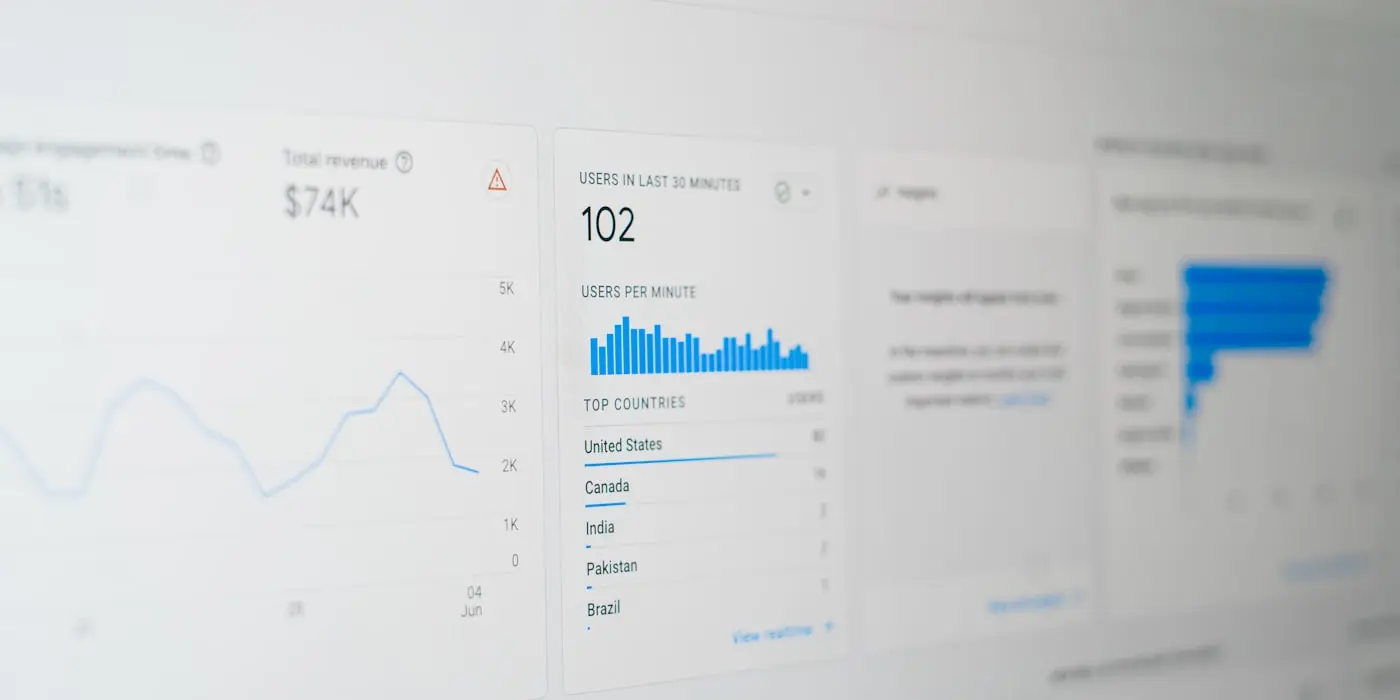
One codebase, many customers, and none of them ever seeing each other's data. This decision is made in week one and it is expensive to reverse in month ten, so it gets made deliberately.
Not just charging a card. Plan upgrades mid-cycle, proration, failed payments and the retry sequence, cancellations, refunds, taxes, and what a customer sees when any of it goes wrong.
Signing someone up is easy. Getting them to the moment where your product is obviously useful is the number that decides whether they are still paying in month three.
The moment your customer is a team instead of one person, you need owners, admins and members with different rights. Retrofitting this is one of the more painful rewrites there is.
You need to look up an account, extend a trial, refund someone, or see why a customer says it's broken. Without this, every support request becomes a developer request.
The first time you sell to a company with a procurement process, you get a questionnaire. Audit logs, encryption, access control and data deletion are much cheaper built in than bolted on.
These two get talked about as if they were the same work, and they are not. Getting the distinction right on day one saves a lot of money.
A SaaS product is something other companies pay you for, month after month. It has many customers whose data can never touch, plans and limits, self-service signup, billing that runs without you, and a support surface. Your customers are strangers, so the software has to survive them doing unexpected things.
Custom software is a tool your own company runs on. One organization, known users, a workflow you control. It can be opinionated and rough at the edges because the people using it work for you and can be trained.
Same technologies, very different priorities. If you are building an internal tool, our custom software page is the right place to start, and it will cost less because most of what is on this page you simply don't need.
If you're not sure which one you're describing, that's a normal place to be. Say it out loud on a call and it usually becomes obvious in a few minutes.
Most first versions carry three or four features that feel essential and turn out not to be. We push to find the one flow someone would actually pay for, and everything else waits.
Tenancy model, auth, billing provider, data structure. Boring decisions that are cheap now and very expensive to change once you have customers on the system.
You see working software every two weeks, not a demo at the end of six months. If the plan needs to change, it changes at a checkpoint instead of mid-flight.
Signups matter less than activation and month-two retention. We instrument those from the start so you find out what's wrong from data instead of from guessing.
We pick boring, well-supported technology on purpose. When you hire your first in-house engineer, or move the project to another team, we want that to be easy.
Typical defaults: TypeScript across the stack, React and Next.js on the front, Node or Python on the back, PostgreSQL for data, Stripe for subscriptions, and deployment on Vercel, AWS or Cloudflare. Your repo from the first commit, with no proprietary framework you can only maintain through us.
Where a project genuinely needs something different, we say why. What we avoid is picking a niche framework that is fun to work in and impossible to staff.
We would rather tell you this before a project than during one.
Think twice if:
It's a good moment when:
We turn down work that fits the first list. A product nobody buys is worse for us than a project we never started.
We work with US companies remotely from Costa Rica, on Central time, so the workday overlaps with yours. These 125 pages go into what building a subscription product looks like for a specific industry in a specific city.
A first version with one core flow, signup, and billing usually takes 12 to 16 weeks. Products with several user types, complex permissions, or heavy integrations run longer. You see working software every two weeks throughout, so you are never waiting until the end to find out where things stand.
You do, from the first commit. Your repository, your cloud accounts, your Stripe account. No proprietary framework and no clause that keeps you tied to us. If you bring the work in-house later, you get documentation, deployment guides and architecture notes with it.
Often, yes. We start with a short audit of the codebase and tell you honestly whether it is worth continuing or whether the foundations will keep costing you. Sometimes the answer is that a partial rebuild is cheaper than fighting the existing structure, and we would rather say that early.
Early months are where most of the learning happens, so many clients keep a monthly retainer for fixes, monitoring and the small improvements that come out of real usage. Larger features get scoped separately. You can also take it in-house whenever you want.
Yes. We can run the whole build, extend your team for a phase, or hand off after the initial version. The arrangements that work best treat us as a temporary extension of your team rather than a vendor behind a wall.
Costa Rica is on Central time, so we overlap with your entire workday and you are not waiting overnight for answers. Compared to offshore teams several time zones away, that difference shows up in how fast decisions get made. We wrote more about the tradeoffs in nearshore vs offshore vs US agency.
Every product is different, so there is no flat number worth publishing. After a discovery call you get a proposal with clear deliverables and a fixed price for the build, plus an optional monthly retainer for what comes after launch.
You can also come at this from a different angle: browse by industry or by US market, where each page is written around what that local economy actually runs on.
Tell us what it does and who pays for it. If building it is the wrong move right now, we'll say so on the call.
Tell us what you need and we'll get back to you. No commitment, no sales pitch.
We use cookies to measure how the site gets used and for ads. Accept them or turn them down.
 Salomon Web Services